
AFib
What Is Atrial Fibrillation?
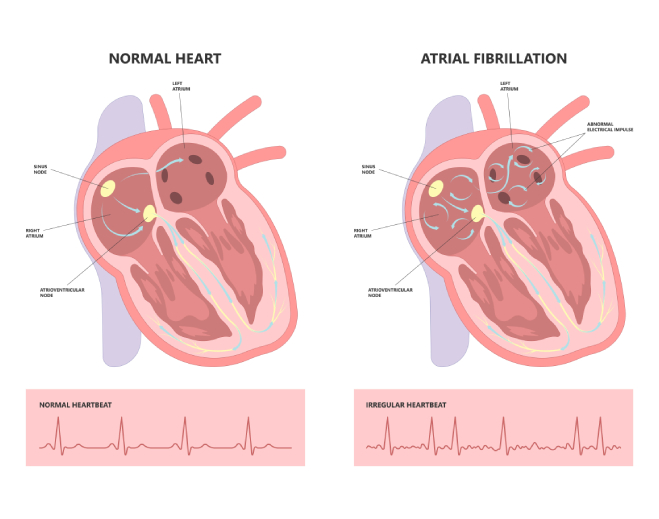
When your heart is beating normally, you may never even notice it. The heart’s two upper chambers (the atria) fill with blood and contract in a steady rhythm to move blood into the lower chambers (the ventricles), keeping circulation flowing smoothly throughout your body.
But sometimes, that rhythm can become irregular due to a condition called atrial fibrillation (AFib).
Atrial fibrillation occurs when the upper chambers of the heart beat irregularly. Instead of contracting in a coordinated way, the atria do not effectively push blood into the ventricles.
When this happens, blood flow to the body becomes disrupted, which can affect how well your heart functions overall. If you’re experiencing symptoms, find a cardiologist in Palm Beach County for the experienced, compassionate care you need.
Signs and Symptoms of AFib
AFib can be difficult to detect because some people may not experience any symptoms at all. For others, symptoms can vary and may include:
- Chest pain
- Dizziness
- Fainting
- Heart palpitations
- Shortness of breath
Because AFib may not always cause noticeable symptoms, it’s important to stay aware of changes in how you feel. If you experience any of the symptoms above, it may be a sign that your heart rhythm needs evaluation.
How Is AFib Diagnosed?
AFib is often found during a routine medical exam when a physician detects an irregular heart rhythm (arrhythmia). In some cases, it may also be diagnosed in an emergency.
To confirm a diagnosis, your physician will:
- Review your symptoms
- Perform a physical exam
- Check your pulse and listen to your heart
- Order an electrocardiogram (ECG) or other tests
If AFib is diagnosed, your physician may refer you to a specialist, such as an electrophysiologist, to discuss treatment options.
AFib Treatment Options Available at Palm Beach Health Network
AFib treatment depends on the underlying cause, which may include conditions like heart disease, high blood pressure, prior heart procedures or other cardiac issues. The goal of treatment is to restore a normal heart rhythm and reduce the risk of blood clots.
Depending on your needs, treatment options may include:
- Implantable loop recorders: Devices that continuously monitor your heart rhythm, helping physicians detect irregularities quickly, even from home and guide treatment decisions.
- Left atrial closure devices (Watchman): A device that blocks off the area where blood clots are most likely to form, offering an alternative for patients who cannot tolerate blood thinners.
- Rotor mapping: Advanced technology that maps abnormal electrical activity in the heart, helping guide targeted treatment for more complex or persistent AFib cases.
- Leadless pacemakers: Small devices implanted through a vein (without wires) that can help reduce AFib episodes and lower the risk of complications like infection.
Your physician may recommend the most appropriate option based on your condition and overall health.